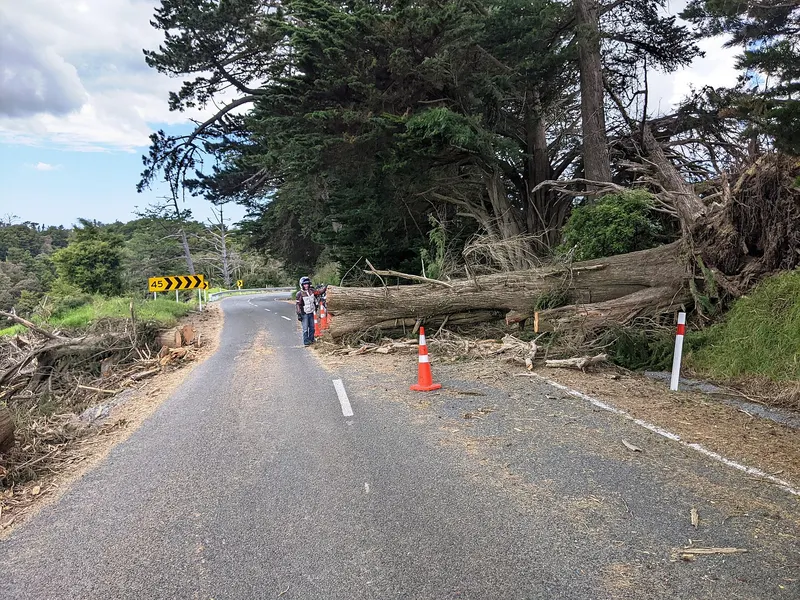
Storm preparation in a landscape splits cleanly into two categories: work that has to happen months ahead to be worth anything, and a short list of things that genuinely help in the last few days. Most of the effort people spend in the final scramble belongs in neither.
The work that only counts if it happened in spring
- Structural pruning. Thinning a crown so wind passes through it, and removing deadwood and crossing limbs, is the single most effective thing anyone does for storm resilience. It is also completely useless as a last-minute measure — a freshly and hastily cut tree is weaker, not stronger.
- Hazard assessment. A leaning trunk with a lifted root plate, a co-dominant stem with included bark, a cavity at the base: these are visible months ahead and are removals, not prunings.
- Drainage. Swales, drains and grade are what decide whether the yard drains in four hours or four days. Nothing done on the Thursday changes that.
The last seventy-two hours: what is actually worth doing
- Clear the drains. Every catch-basin grate, gutter outlet and channel drain on the property, cleared of leaf litter. This takes twenty minutes and is the highest-value hour of storm prep available to a homeowner.
- Stow everything loose. Furniture, pots, tools, umbrellas, the grill, the bin. In serious wind, a terracotta pot is a projectile aimed at a window.
- Photograph the property. Ten minutes with a phone, walking the yard and the elevations. If you later have to describe what was there before, a dated set of photographs is worth more than any recollection.
- Leave the trees alone. This is the one people find hardest. Cutting limbs in a hurry, in the day before a storm, with a ladder and a homeowner chainsaw, causes more injuries than the storm does.
What not to bother with
Do not stake mature trees — you will not out-engineer a hurricane with a strap, and you may girdle the trunk. Do not over-water in advance; saturated ground is exactly what makes root plates lift. Do not lay fresh mulch, which floats and then blocks the drains you just cleared.
Afterwards
Photograph everything again before anything is moved. Keep off any yard with a downed line in it and assume every wire is live. Work from the drive inward — access first — and leave the leaners to somebody with ropes. And be careful with out-of-area crews that arrive within a day and want payment up front: after every major storm they come, and after every major storm they go.
We triage storm calls the day they come in: (225) 555-0142.
More field notes
How to read where water goes on your own lot
You do not need a survey to find out where your yard sends its water. You need one heavy rain and twenty minutes of paying attention.
BedsMulch depth is a drainage decision, not a tidiness one
Two to three inches suppresses weeds and holds moisture. Five inches sheds rain, rots trunks and turns a bed into a dam.